
A Whirlpool washer that will not drain water is one of the most common washing machine problems. When water remains in the tub after a cycle, the washer cannot complete the spin cycle properly, leaving clothes soaking wet and preventing normal operation.
In many cases, the problem is caused by a clogged drain filter, blocked drain hose, or faulty drain pump. This guide explains the most common causes and provides step-by-step troubleshooting instructions.
Symptoms
If your Whirlpool washer is not draining, you may notice one or more of the following symptoms:
- Water remains inside the drum after the cycle ends
- Clothes come out wet after washing
- Washer stops before the spin cycle
- Standing water in the tub
- Drain cycle takes longer than normal
- Humming noise from the drain pump
- Error code appears on the display
- Door remains locked because water is still inside
Possible Causes
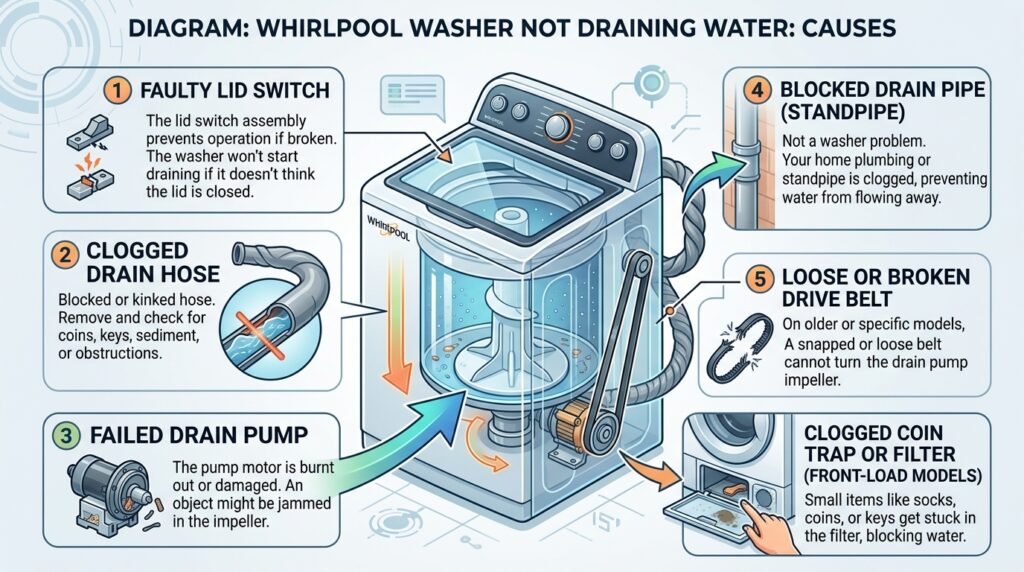
Several components can prevent a Whirlpool washer from draining properly.
1. Clogged Drain Pump Filter
The drain pump filter traps lint, coins, hair, and small objects before they reach the drain pump. Over time, debris can restrict water flow and prevent the washer from draining.
2. Blocked Drain Hose
A drain hose can become clogged with lint, dirt, or foreign objects. Water cannot leave the machine if the hose is blocked.
3. Kinked Drain Hose
A bent or crushed hose can restrict water flow and cause slow draining or complete drainage failure.
4. Faulty Drain Pump
The drain pump pushes water out of the washer. If the pump motor fails or the impeller becomes damaged, water may remain inside the tub.
5. Foreign Objects in the Pump
Coins, buttons, socks, and other small items can become lodged inside the drain pump and prevent it from operating correctly.
6. Defective Door Lock or Lid Switch
Many Whirlpool washers will not drain or spin if the door lock or lid switch is not functioning properly.
7. Faulty Pressure Switch
The pressure switch monitors the water level inside the washer. If it provides incorrect readings, the washer may fail to drain.
8. Failed Main Control Board
Although less common, a defective control board can prevent the drain pump from receiving power.
🔧 Whirlpool Washer Not Draining – Common Error Codes
If your Whirlpool washer is not draining properly, it often displays specific error codes that help identify the issue. These codes usually point to problems with the drain pump system, excess suds, or cycle interruptions.
Below are the most common Whirlpool error codes related to draining problems and what they mean.
1. F9E1 – Long Drain Error
- Most common drain-related code
- Indicates the washer is taking too long to drain water
- Usually caused by clogged pump, hose blockage, or weak drain pump
2. F9E2 – Drain Pump System Error
- Drain pump cannot operate correctly
- May be due to electrical failure, wiring issue, or blocked pump
- Washer may stop mid-cycle with water inside
3. SUD / Sd – Excess Suds Error
- Too much detergent foam prevents proper draining
- Washer may extend drain time or stop cycle
- Often mistaken for a pump failure
4. F5E2 / F5E3 – Lid Lock Drain Interruption (Top Load Models)
- Lid lock prevents cycle continuation, including drain/spin
- Washer may not enter spin or drain mode properly
5. F8E1 – Long Fill / No Water Flow (Indirect Drain Issue)
- Not a direct drain error, but can interrupt cycle progress
- Poor water flow can delay or affect draining behavior
Step-by-Step Troubleshooting
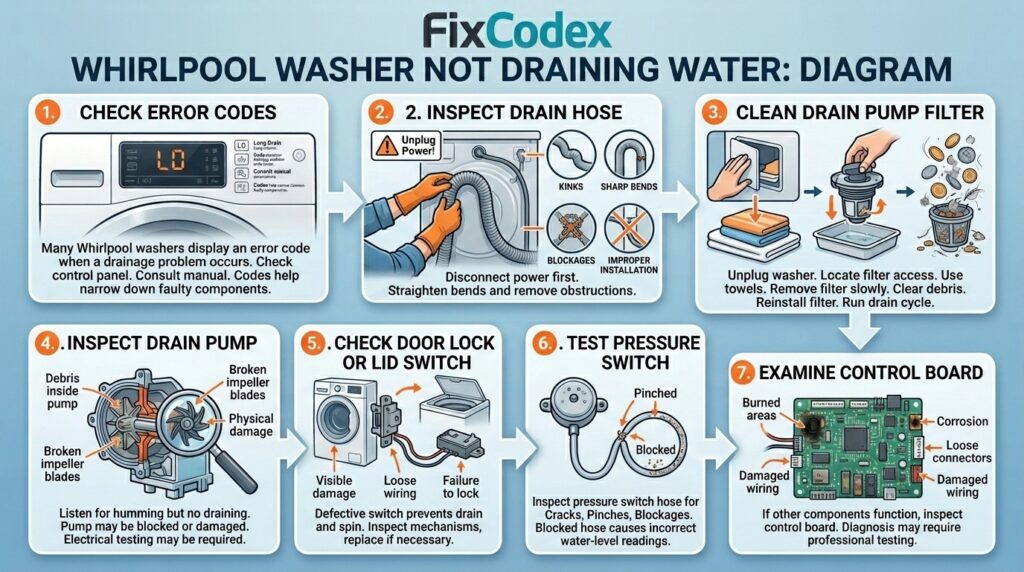
Follow these steps to identify the source of the problem.
1. Check for Error Codes
Many Whirlpool washers display an error code when a drainage problem occurs.
Check the control panel for any codes and consult the washer’s error code guide. Error codes can help narrow down the faulty component.
2. Inspect the Drain Hose
Disconnect the washer from power before performing any inspection.
Examine the drain hose for:
- Kinks
- Sharp bends
- Blockages
- Improper installation
Straighten any bends and remove visible obstructions.
3. Clean the Drain Pump Filter
A clogged filter is one of the most common reasons a washer will not drain.
To clean the filter:
- Unplug the washer.
- Locate the drain pump access panel.
- Place towels or a shallow container underneath.
- Remove the filter slowly.
- Clear lint, hair, coins, and debris.
- Reinstall the filter securely.
Run a drain cycle after cleaning.
4. Inspect the Drain Pump
Listen carefully during the drain cycle.
If you hear a humming sound but water does not drain, the pump may be blocked.
Check for:
- Debris inside the pump
- Broken impeller blades
- Signs of physical damage
If the pump does not operate at all, electrical testing may be required.
5. Check the Door Lock or Lid Switch
A defective door lock assembly can prevent draining and spinning.
Inspect the lock mechanism for:
- Visible damage
- Loose wiring
- Failure to lock properly
Replace the component if necessary.
6. Test the Pressure Switch
Inspect the pressure switch hose for:
- Cracks
- Pinches
- Blockages
A blocked pressure hose can cause incorrect water-level readings.
7. Examine the Control Board
If all other components appear functional, inspect the control board.
Look for:
- Burned areas
- Corrosion
- Loose connectors
- Damaged wiring
Control board diagnosis may require professional testing equipment.
Common Parts for Whirlpool Washer Not Draining Water
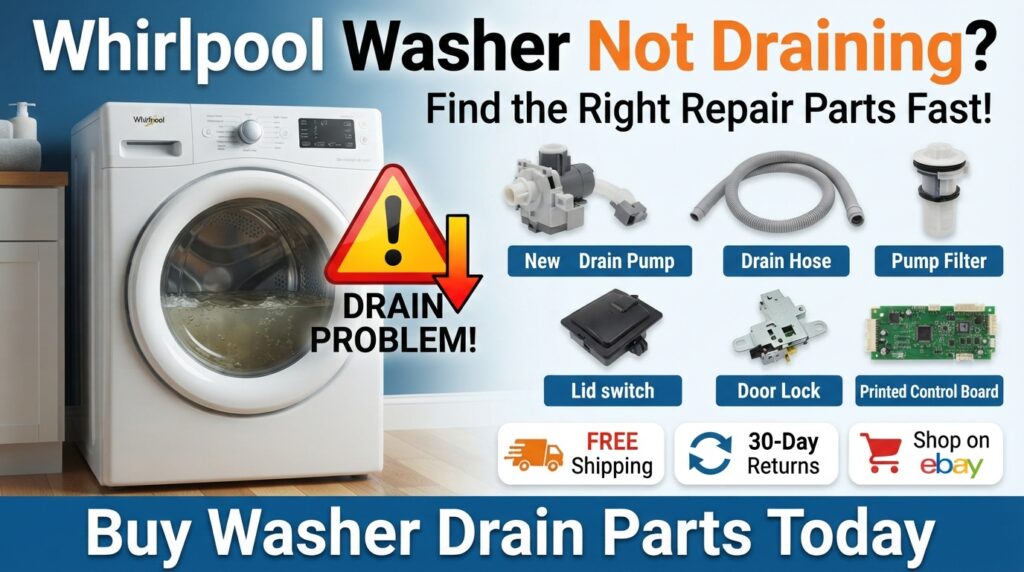
A Whirlpool washer that will not drain may have a problem with key components such as the drain pump, drain hose, pump filter, lid switch, door lock assembly, or control board. Check the faulty part and replace it with the correct repair component to restore proper draining performance.
Find and buy Whirlpool washer drain repair parts on eBay with free shipping and 30-day returns.
Commonly Overlooked Causes
Many homeowners overlook these simple causes when troubleshooting a drainage problem.
1. Small Clothing Items Trapped in the Drain System
Baby socks, underwear, and small garments can enter the drain path and create a blockage.
2. Excessive Detergent Use
Using too much detergent can create excessive suds.
Modern Whirlpool washers may pause draining when oversudsing occurs, resulting in standing water inside the tub.
3. Dirty Drain Filter
Even a partially clogged filter can significantly reduce drainage performance.
Incorrect Drain Hose Installation
If the drain hose is installed too high or too low, drainage issues can occur.
4. Loose Electrical Connections
Vibration over time can loosen wiring connections to the drain pump or control board.
Parts That May Need Replacement
If troubleshooting does not solve the problem, one of the following parts may need replacement:
- Drain Pump
- Drain Pump Filter
- Drain Hose
- Door Lock Assembly
- Lid Switch
- Pressure Switch
- Wiring Harness
- Main Control Board
Always verify the faulty component before ordering replacement parts.
👉 You can find parts and check latest prices on eBay, with many listings offering free returns, making it easier to compare options before buying.
Prevention Tips
Regular maintenance can help prevent future drainage problems.
1. Clean the Filter Regularly
Inspect and clean the drain pump filter every one to three months.
2. Check Pockets Before Washing
Coins, screws, keys, and other small objects frequently cause pump blockages.
3. Avoid Overloading the Washer
Overloading can place extra strain on the drain system and reduce washing performance.
Use the Correct Amount of Detergent
Follow Whirlpool’s detergent recommendations to avoid oversudsing issues.
4. Inspect Hoses Annually
Check drain hoses for signs of wear, cracking, or restrictions.
When to Call a Technician
Professional service may be necessary if:
- The drain pump receives power but does not run
- Electrical testing is required
- The control board is suspected to be faulty
- Wiring repairs are needed
- The washer repeatedly fails to drain after troubleshooting
Continuing to operate a washer with a drainage problem can lead to additional component damage.
Frequently Asked Questions
1. Why is my Whirlpool washer full of water after the cycle?
The most common causes are a clogged drain filter, blocked drain hose, or faulty drain pump.
2. Can a clogged filter stop a Whirlpool washer from draining?
Yes. A clogged drain pump filter is one of the leading causes of drainage failure.
3. Why does my Whirlpool washer make a humming noise but not drain?
The drain pump may be blocked by debris or the pump motor may be failing.
4. How often should I clean the drain pump filter?
Most homeowners should clean the filter every one to three months.
Can too much detergent prevent draining?
Yes. Excessive suds can interfere with normal drainage and trigger washer errors.
Conclusion
When a Whirlpool washer is not draining water, the most common causes are a clogged drain pump filter, blocked drain hose, or faulty drain pump. Start with simple inspections and cleaning procedures before replacing parts.
Regular maintenance, proper detergent use, and routine filter cleaning can help keep your Whirlpool washer operating efficiently and prevent future drainage issues.
Explore Related Washer Issues
- Whirlpool Washer F0E3 Error Code – Overload Condition
- How to Test Whirlpool W11603810 Control Board Before Replacing It
- Burning Smell in Whirlpool Washer – Is the W11603810 Control Board Damaged?
Looking for more washer troubleshooting guides? Explore our full collection of easy DIY fixes and step-by-step solutions for common washing machine problems.
Affiliate Disclosure: This post may contain affiliate links. If you purchase through these links, we may earn a small commission at no extra cost to you.
2 thoughts on “Whirlpool Washer Not Draining Water: Causes and Troubleshooting Guide”