
What Does the Whirlpool Washer F3E1 Error Code Mean?
The Whirlpool Washer F3E1 Error Code indicates a Pressure Sensor Fault. This error occurs when the washer cannot accurately detect or monitor the water level inside the tub.
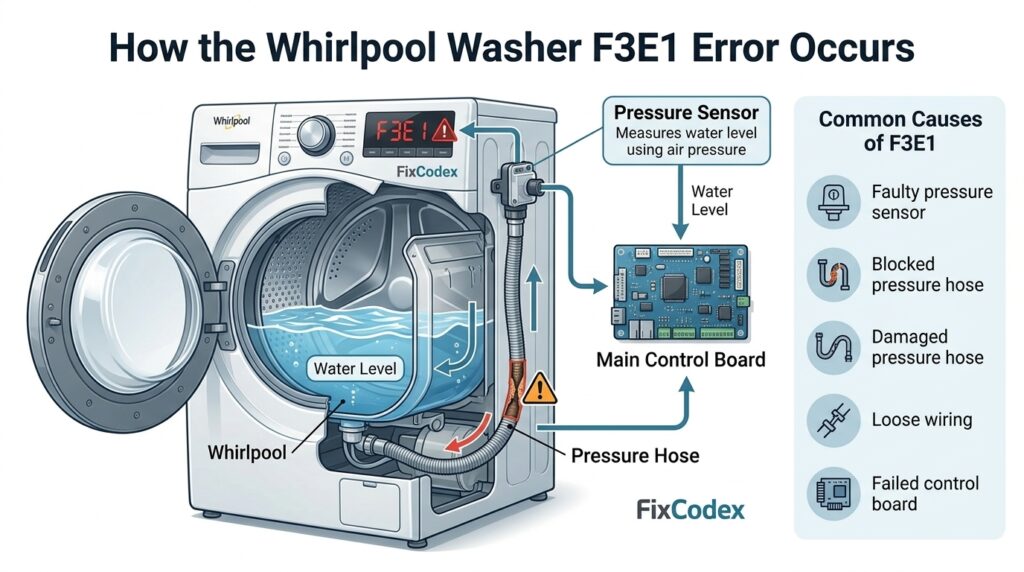
The pressure sensor works with the control board to determine how much water is in the washer during each cycle. When the sensor provides incorrect readings or stops communicating properly, the washer may display the F3E1 error code and interrupt normal operation.
“Is a Blocked Pressure Hose Triggering F3E1?”
Common causes include a faulty pressure sensor, a blocked or damaged pressure hose, wiring problems, or a malfunctioning main control board.
Common Symptoms of the F3E1 Error
The Whirlpool Washer F3E1 Error Code can cause a variety of water level and cycle-related problems. Because the washer cannot accurately detect the amount of water in the tub, it may overfill, underfill, stop unexpectedly, or fail to start altogether.
Recognizing these common symptoms can help you diagnose the issue and begin troubleshooting more quickly.
When the F3E1 error appears, you may notice one or more of the following symptoms:
- Washer displays the F3E1 error code
- Washer will not fill properly
- Overfilling or underfilling with water
- Cycle stops unexpectedly
- Washer will not start
- Drain pump runs continuously
- Clothes remain excessively wet after washing
What Causes the Whirlpool Washer F3E1 Error Code?
Several issues can trigger a Pressure Sensor Fault.
1. Faulty Pressure Sensor
The pressure sensor monitors water levels throughout the wash cycle. If the sensor fails, it may send inaccurate signals to the control board.
2. Blocked Pressure Hose
A clogged pressure hose can prevent air pressure from reaching the sensor correctly, resulting in inaccurate water level readings.
3. Damaged Pressure Hose
Cracks, holes, or loose connections in the pressure hose can interfere with pressure measurements.
4. Wiring Problems
Loose, damaged, or corroded wiring between the pressure sensor and control board may disrupt communication.
5. Main Control Board Malfunction
In some cases, the control board may misinterpret sensor signals or fail to process water level information properly.
How to Fix Whirlpool Washer F3E1 Error Code
Short Intro
The Whirlpool Washer F3E1 Error Code is often caused by a problem with the pressure sensor system or its connection to the control board.
In many cases, the issue can be resolved by checking the pressure hose, inspecting wiring, or replacing a faulty component. Follow the troubleshooting steps below to diagnose and fix the error.
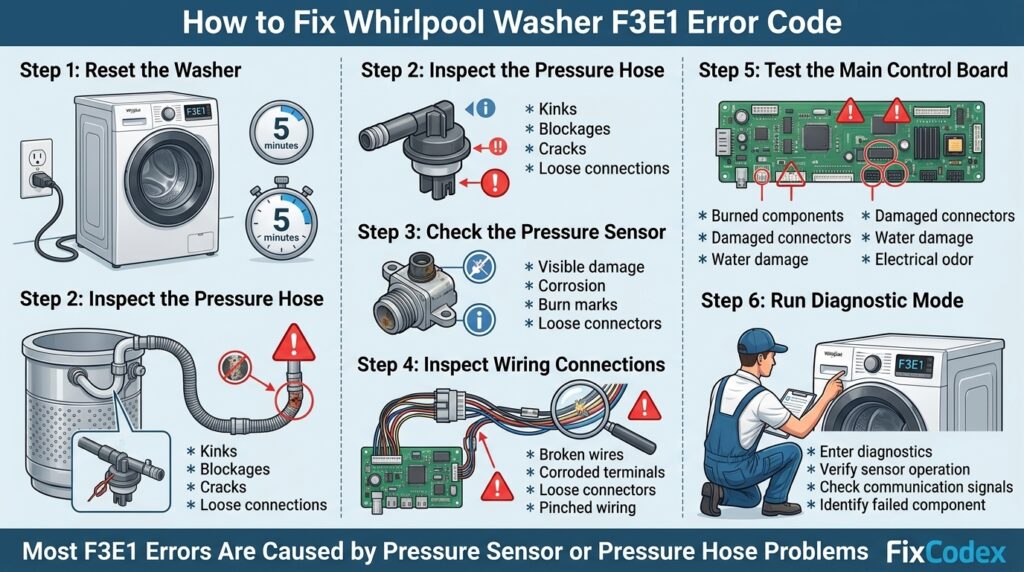
Follow these troubleshooting steps to identify and resolve the issue.
Step 1: Reset the Washer
Temporary electronic glitches can sometimes trigger the F3E1 code.
- Unplug the washer.
- Wait 5 minutes.
- Plug the washer back in.
- Run a test cycle.
If the error returns, continue with the next steps.
Step 2: Inspect the Pressure Hose
Disconnect power before servicing the washer.
- Locate the pressure hose connected to the pressure sensor.
- Check for:
- Kinks
- Blockages
- Cracks
- Loose connections
- Clear any obstructions.
- Reconnect the hose securely.
A blocked pressure hose is one of the most common causes of the F3E1 error.
Step 3: Check the Pressure Sensor
Inspect the pressure sensor for signs of failure.
Look for:
- Visible damage
- Corrosion
- Burn marks
- Loose electrical connectors
Replace the sensor if it appears defective.
Step 4: Inspect Wiring Connections
Examine the wiring harness between the pressure sensor and the control board.
Check for:
- Broken wires
- Corroded terminals
- Loose connectors
- Pinched wiring
Repair or replace damaged wiring as needed.
Step 5: Test the Main Control Board
If the pressure sensor and hose are functioning correctly, inspect the control board.
Signs of control board failure include:
- Burned components
- Damaged connectors
- Water damage
- Unusual electrical odors
Replace the board if necessary.
Step 6: Run Diagnostic Mode
Most Whirlpool washers include a built-in diagnostic mode.
Running diagnostics can help verify whether the pressure sensor, wiring, or control board is causing the error.
Consult your washer’s service manual for model-specific diagnostic procedures.
Watch: Real F3E1 Error Code Repair on a Whirlpool Washer
Wondering what actually causes the Whirlpool F3E1 error code? In this video, All Pro Appliance Service demonstrates a real-world repair on a Whirlpool WFW75HEFW0 washer.
You’ll see how a pressure hose and pressure switch issue triggered the error and learn the troubleshooting steps used to diagnose and fix the problem. Watch the video below to see the repair process in action.
Can You Continue Using the Washer?
It is not recommended.
A faulty pressure sensor can cause improper water levels, which may lead to poor cleaning performance, excessive water usage, or potential overflow conditions. Addressing the problem promptly can help prevent additional damage.
How Much Does It Cost to Fix an F3E1 Error?
Repair costs vary depending on the failed component.
| Component | Estimated Cost |
|---|---|
| Pressure Hose | $10–$40 |
| Pressure Sensor | $30–$150 |
| Wiring Repair | $0–$75 |
| Main Control Board | $150–$400 |
| Professional Service Call | $75–$150 |
Actual costs vary by washer model and location.
How to Prevent Future F3E1 Errors
To reduce the risk of pressure sensor faults:
- Inspect hoses regularly for damage.
- Avoid overloading the washer.
- Keep the washer clean and free of debris.
- Address drainage problems promptly.
- Check wiring connections during maintenance.
Regular maintenance can help ensure accurate water level detection and reliable washer performance.
Frequently Asked Questions
What does F3E1 mean on a Whirlpool washer?
The F3E1 code indicates that the washer cannot accurately determine the water level due to a pressure sensor or pressure system problem.
Can a clogged pressure hose cause F3E1?
Yes. A blocked pressure hose is one of the most common causes of the F3E1 error code.
Will resetting the washer fix the F3E1 error?
A reset may clear temporary electronic faults, but it will not fix a failed pressure sensor or blocked hose.
Is the pressure sensor expensive to replace?
Pressure sensors are generally affordable and often cost less than replacing the main control board.
The Whirlpool Washer F3E1 Error Code signals a pressure sensor fault that prevents the washer from accurately detecting water levels. In many cases, the problem can be resolved by inspecting the pressure hose, checking wiring connections, or replacing a faulty pressure sensor. If these steps do not eliminate the error, further diagnosis of the main control board may be necessary.
Looking for another Whirlpool washer error code? View our complete list of Whirlpool washer error codes and troubleshooting guides here.
Related Articles
- Whirlpool Washer F2E2 Error Code: Causes, Troubleshooting, and Fixes
- Whirlpool Washer F2E1 Error Code: Causes, Troubleshooting, and Fixes
- Whirlpool Washer F1E2 Error Code: Causes, Troubleshooting, and Fixes
Disclaimer: The information provided on this website is for educational and informational purposes only. Always disconnect power and follow the manufacturer’s instructions before inspecting or repairing any appliance. We are not responsible for any damage, injury, or loss resulting from the use of information on this site.
Affiliate Disclosure: This website may contain affiliate links. If you purchase a product or part through these links, we may earn a small commission at no additional cost to you. These commissions help support our website and allow us to continue providing free appliance repair guides and troubleshooting resources.