
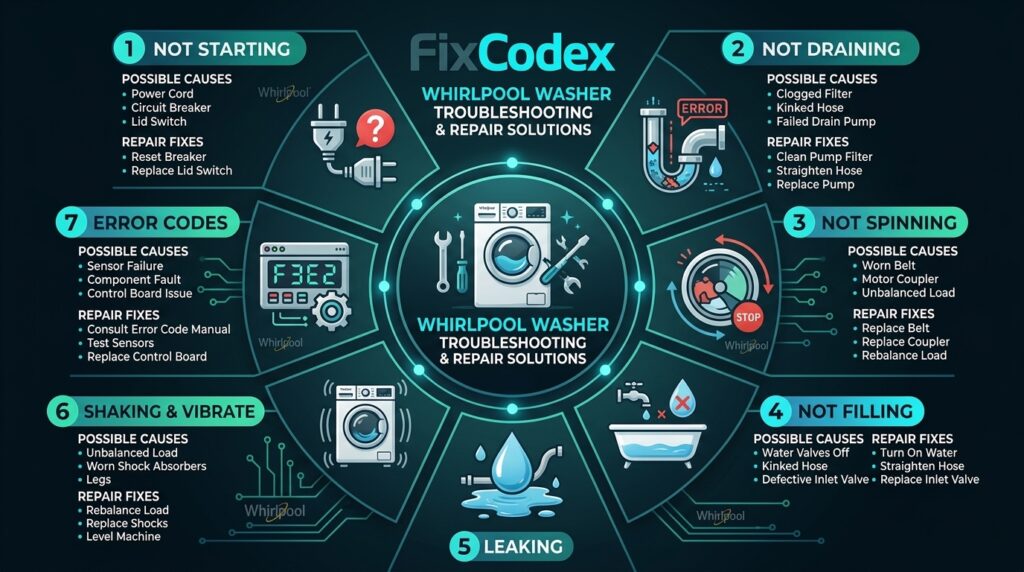
If your Whirlpool washer is not starting, draining, spinning, filling with water, or completing a cycle, this Whirlpool Washer Troubleshooting guide can help you identify the problem and find the right solution.
Modern Whirlpool washing machines contain multiple systems that work together, including the control board, drain pump, drive motor, water inlet valve, lid lock assembly, suspension system, and various sensors. When one of these components fails, the washer may stop working properly, display an error code, or exhibit unusual behavior.
This troubleshooting hub is designed to help homeowners diagnose common Whirlpool washer problems, understand the most likely causes, and determine whether a repair or replacement part is needed.
Common Whirlpool Washer Problems
Washer Won’t Start
A Whirlpool washer that won’t start may be caused by:
- Failed lid lock assembly
- Defective control board
- Faulty user interface
- Wiring harness issues
- Power supply problems
Washer Not Draining
If water remains in the tub after a cycle, possible causes include:
- Failed drain pump
- Clogged drain hose
- Drain filter blockage
- Control board malfunction
Washer Not Spinning
A washer that won’t spin properly may have:
- Drive motor failure
- Worn drive belt
- Lid lock problems
- Motor control issues
- Suspension system problems
Washer Not Filling With Water
If the washer won’t fill or fills slowly, check for:
- Faulty water inlet valve
- Water supply issues
- Pressure switch failure
- Water level sensor problems
Washer Shaking or Vibrating Excessively
Excessive movement during the spin cycle may indicate:
- Worn suspension rods
- Failed shock absorbers
- Unbalanced load
- Damaged drum support components
Washer Stops Mid-Cycle
A Whirlpool washer that stops unexpectedly may be caused by:
- Control board failure
- Motor overheating
- Sensor communication issues
- Electrical connection problems
Washer Stuck on Sensing
The sensing cycle may become stuck due to:
- Faulty lid lock assembly
- Water inlet valve issues
- Control board errors
- Sensor malfunctions
Washer Has Power But Won’t Run
When lights are on but the washer won’t operate, common causes include:
- Failed control board
- Defective lid lock
- User interface board failure
- Wiring problems
Troubleshooting by Error Code
Many Whirlpool washer problems are accompanied by diagnostic error codes. These codes can help identify the affected system and narrow down potential causes.
Popular Whirlpool error codes include:
- F1E1 – Control Board Error
- F3E1 – Pressure System Error
- F5E2 – Lid Lock Error
- F7E1 – Motor or Speed Sensor Error
- F8E1 – Long Fill Error
- F9E1 – Drain Error
Visit our Whirlpool Washer Error Codes section for detailed explanations, causes, and repair recommendations.
Common Whirlpool Washer Parts That Fail
Many troubleshooting cases eventually lead to a failed component that requires replacement.
The most commonly replaced Whirlpool washer parts include:
- Main Control Boards
- Drain Pumps
- Lid Lock Assemblies
- Water Inlet Valves
- Drive Motors
- Suspension Rods
- Shock Absorbers
- Pressure Switches
- User Interface Boards
- Heating Elements
Understanding which part is responsible for the problem can save time and reduce unnecessary repair costs.
Whirlpool Washer Repair Resources
Our troubleshooting guides cover a wide range of Whirlpool washer issues, from simple maintenance problems to more advanced component failures. Whether your washer displays an error code, refuses to start, won’t drain, or experiences excessive vibration, you’ll find step-by-step diagnostic information throughout this section.
Browse the troubleshooting articles below to find the specific Whirlpool washer problem you’re experiencing and learn how to diagnose, repair, and maintain your appliance.
Start Troubleshooting Your Whirlpool Washer
Select the symptom that best matches your washer’s behavior to begin troubleshooting:
- Washer Won’t Start
- Washer Not Draining
- Washer Not Spinning
- Washer Not Filling Water
- Washer Shaking During Spin
- Washer Stops Mid-Cycle
- Washer Stuck on Sensing
- Washer Has Power But Won’t Run
By identifying the symptoms first, you can quickly narrow down the possible causes and determine whether a repair, adjustment, or replacement part is needed.