
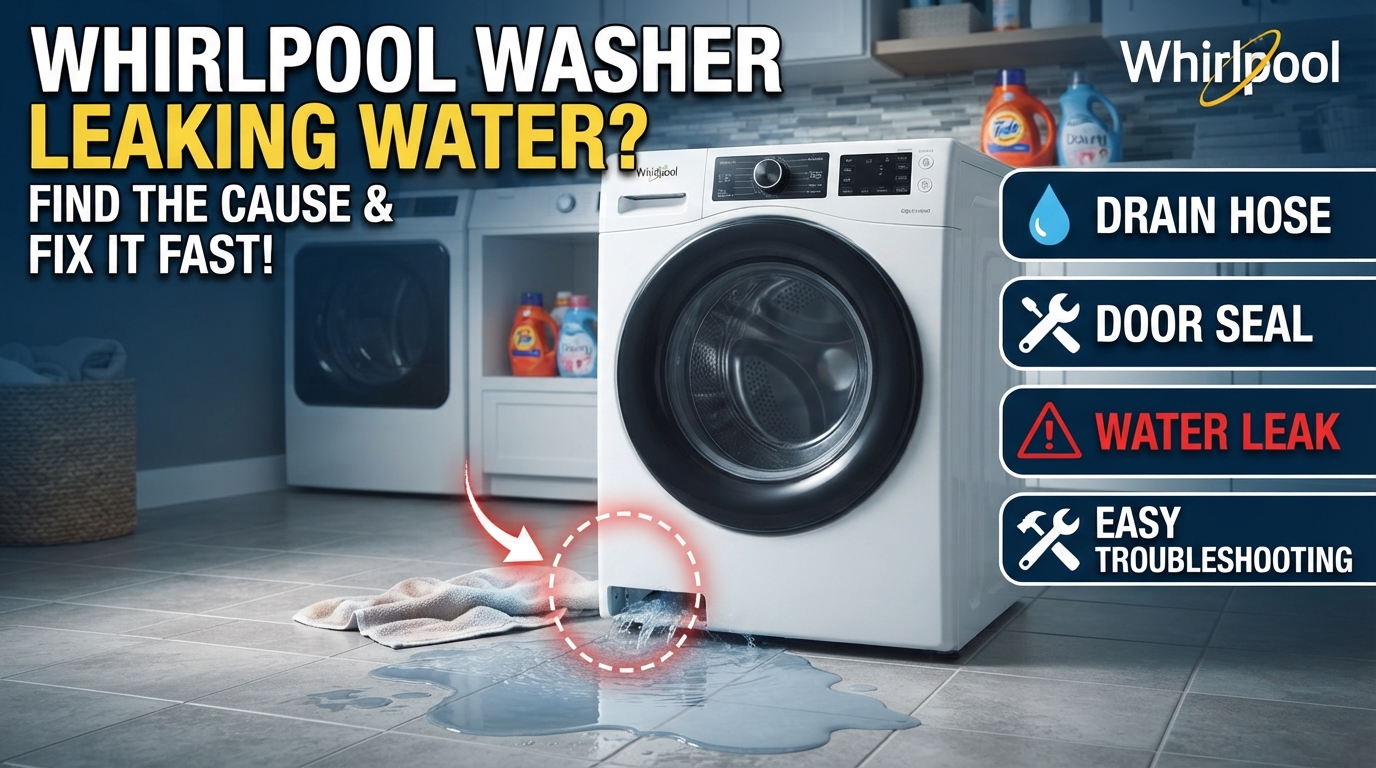
A Whirlpool washer leaking water is a common appliance problem that can happen during different stages of the wash cycle, including filling, washing, draining, or spinning. Even a small leak should be inspected and repaired promptly to help prevent water damage to floors, cabinets, and nearby areas.
“A small washer leak can quickly lead to costly water damage. Inspect and repair leaks early to protect your appliance and home.”
The source of a washer leak can vary depending on when the water appears. Common causes include damaged drain hoses, loose hose connections, worn door boot seals, leaking tub seals, or overfilling caused by a faulty pressure sensor. Identifying when the leak occurs can help narrow down the faulty component and make repairs easier.
How to Find the Source of a Whirlpool Washer Leak
Start by unplugging the washer and checking for visible signs of water around the appliance. Inspect the hoses, seals, and connections carefully. If safe to do so, observe the washer during a cycle to determine whether the leak occurs while the washer is filling, agitating, draining, or spinning.
Look for:
- Water pooling underneath the washer
- Drips from the rear hose connections
- Water leaking from the door area
- Excessive water levels inside the tub
- Signs of cracked, worn, or damaged parts
Common Parts to Check for Washer Water Leaks
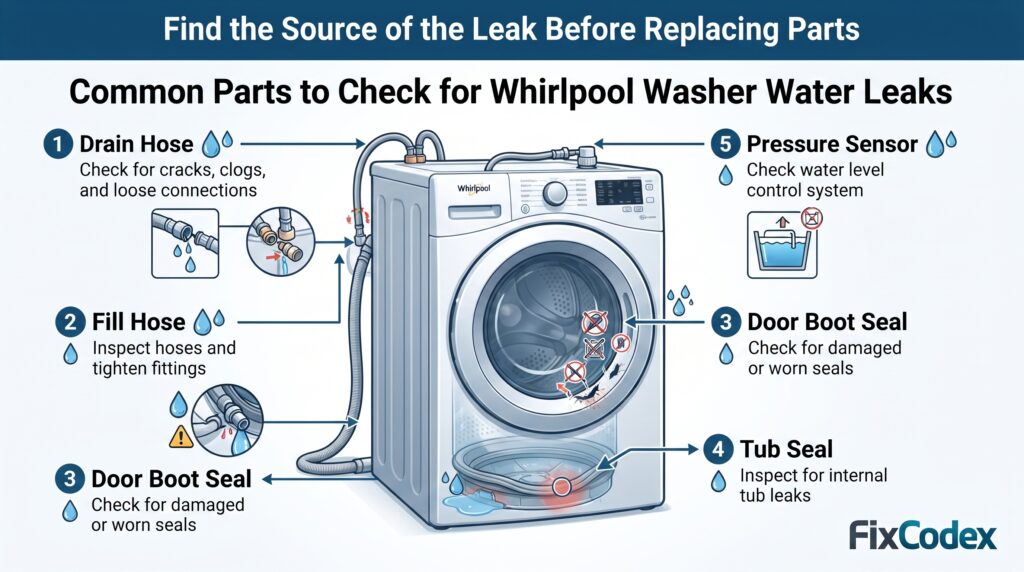
Drain Hose
A cracked, split, or loose drain hose can cause water to leak during the drain cycle. Check the hose for damage, proper installation, and secure connections.
Fill Hose
The fill hoses connect the washer to the water supply and can develop cracks or loose fittings over time. Inspect both ends for leaks and tighten connections if needed.
Door Boot Seal
For front-load Whirlpool washers, a worn or damaged door boot seal can allow water to escape from the front of the washer during operation.
Tub Seal
A damaged tub seal may allow water to leak from the bottom of the washer, especially during high-speed spin cycles. A leaking tub seal may require additional inspection of the washer’s internal components.
Pressure Sensor
A faulty pressure sensor may incorrectly detect water levels, causing the washer to overfill and leak. Checking the sensor and related tubing can help identify water level control problems.
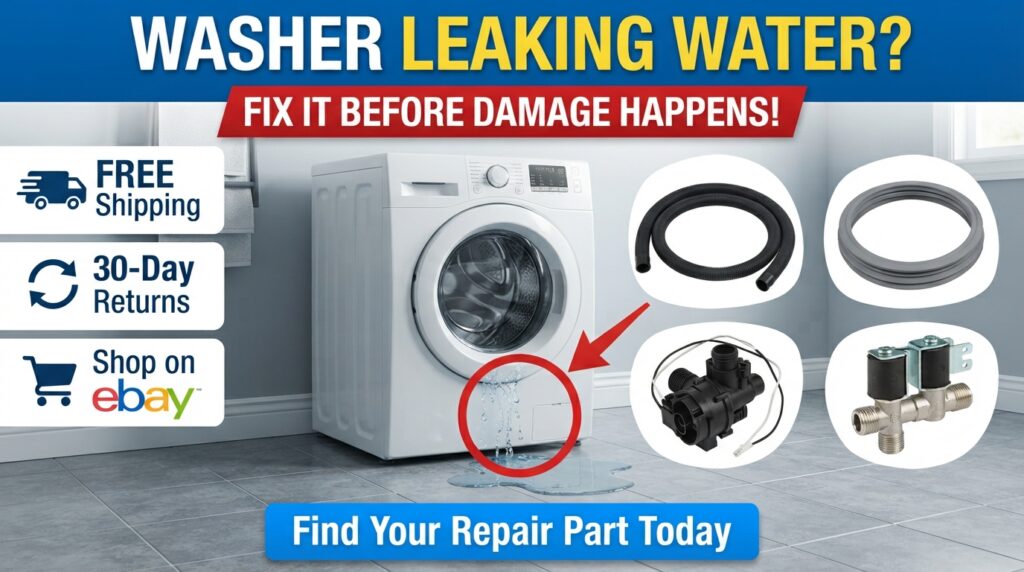
Washer Leaking Water? Find the Right Replacement Parts Today
Stop water leaks before they cause costly damage. Check prices and find the replacement parts you need to repair your leaking washer, including hoses, seals, pumps, valves, and other common components.
Shop washer leak repair parts on eBay today with free shipping and 30-day returns.
Whirlpool Washer Error Codes Related to Water Leaking Problems
A Whirlpool washer leaking water may sometimes be connected to error codes involving water supply, draining, or water level detection issues. While error codes do not always indicate a leak directly, they can help identify problems with components that control water flow, drainage, and tub filling.
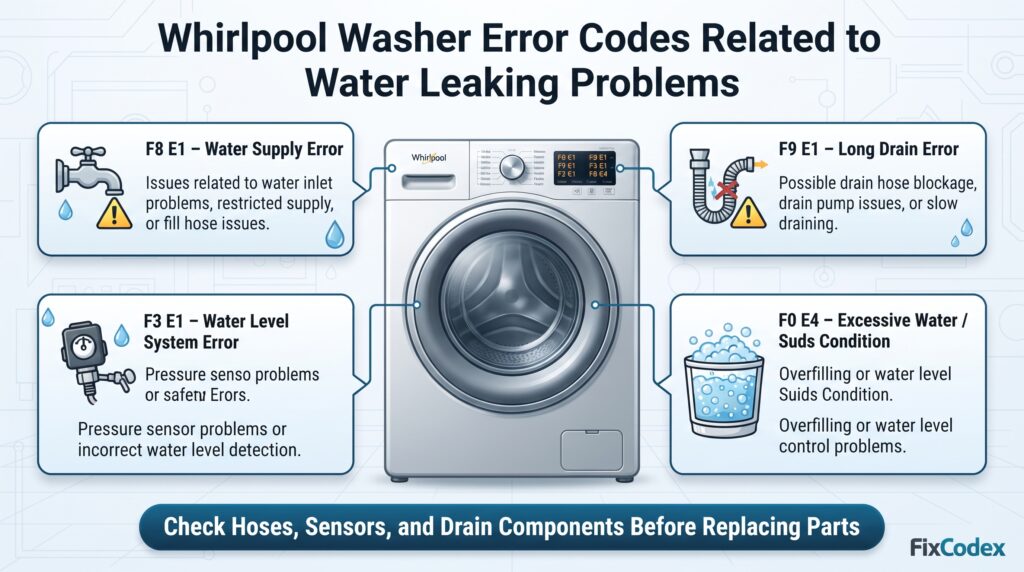
Common Whirlpool washer error codes related to water leaks and water control issues include:
F8 E1 – Water Supply Error
Possible issue: The washer is not filling properly or is detecting an incorrect water level.
Common causes:
- Restricted water supply
- Kinked or damaged fill hoses
- Faulty water inlet valve
- Water level sensing issues
F9 E1 – Long Drain Error
Possible issue: The washer is taking too long to drain water.
Common causes:
- Clogged drain hose
- Blocked drain pump filter
- Faulty drain pump
- Drain hose installation problems
F5 E1 / F5 E2 – Door or Lid Lock Errors
Possible issue: The washer cannot properly lock the door or lid before operation.
Common causes:
- Damaged door/lid lock assembly
- Control communication problems
- Wiring connection issues
F3 E1 – Water Level System Error
Possible issue: The washer detects a problem with water level sensing.
Common causes:
- Faulty pressure sensor
- Blocked pressure hose
- Control board communication failure
F0 E4 – Excessive Water or Suds Condition
Possible issue: The washer detects excessive water levels or an abnormal load condition.
Common causes:
- Overloading
- Too much detergent
- Water level sensing problems
Washing Machine Leaking Water? Common Causes & Fixes
Is your front-load washing machine leaking water? This troubleshooting guide explains the most likely causes of washer leaks and the defective parts that may be responsible. Learn how to identify common issues with hoses, seals, pumps, and other components to help diagnose the problem and find the right repair solution.
Video reference: RepairClinic.com
When to Check Leak-Related Components
If your Whirlpool washer displays a water-related error code and is leaking, inspect these parts first:
- Drain hose and connections
- Fill hoses and inlet valve
- Door boot seal (front-load models)
- Drain pump and filter
- Tub seal
- Pressure sensor and pressure hose
Always disconnect power and water supply before inspecting or replacing washer components.
Prevent Whirlpool Washer Water Leaks
Regular maintenance can help reduce the chance of leaks:
- Inspect hoses periodically for cracks or wear
- Avoid overloading the washer
- Keep the door boot seal clean and free of debris
- Replace damaged hoses or seals promptly
- Check connections if the washer has recently been moved
Finding and repairing the source of a Whirlpool washer water leak quickly can help protect your home and extend the life of your appliance.
Other Whirlpool Washer Problems
Experiencing a different issue with your Whirlpool washer? From unusual noises and draining problems to spin failures, error codes, and control issues, many washer problems can be diagnosed and repaired by identifying the faulty component.
Check our Whirlpool washer troubleshooting guide for more common problems, possible causes, and recommended solutions to help restore your appliance’s performance.
Washer Control Boards:
- W11777413 Whirlpool Washer Control Board – Genuine OEM Electronic Control Replacement
- Whirlpool W11629601 Washer Control Board – Main Electronic Control Replacement
- Whirlpool W11578571 Washer Control Board – OEM Main Control Unit Replacement
Affiliate Disclosure: We may earn a commission from qualifying purchases made through our affiliate links at no extra cost to you.
1 thought on “Whirlpool Washer Leaking Water – Causes and Troubleshooting Guide”