
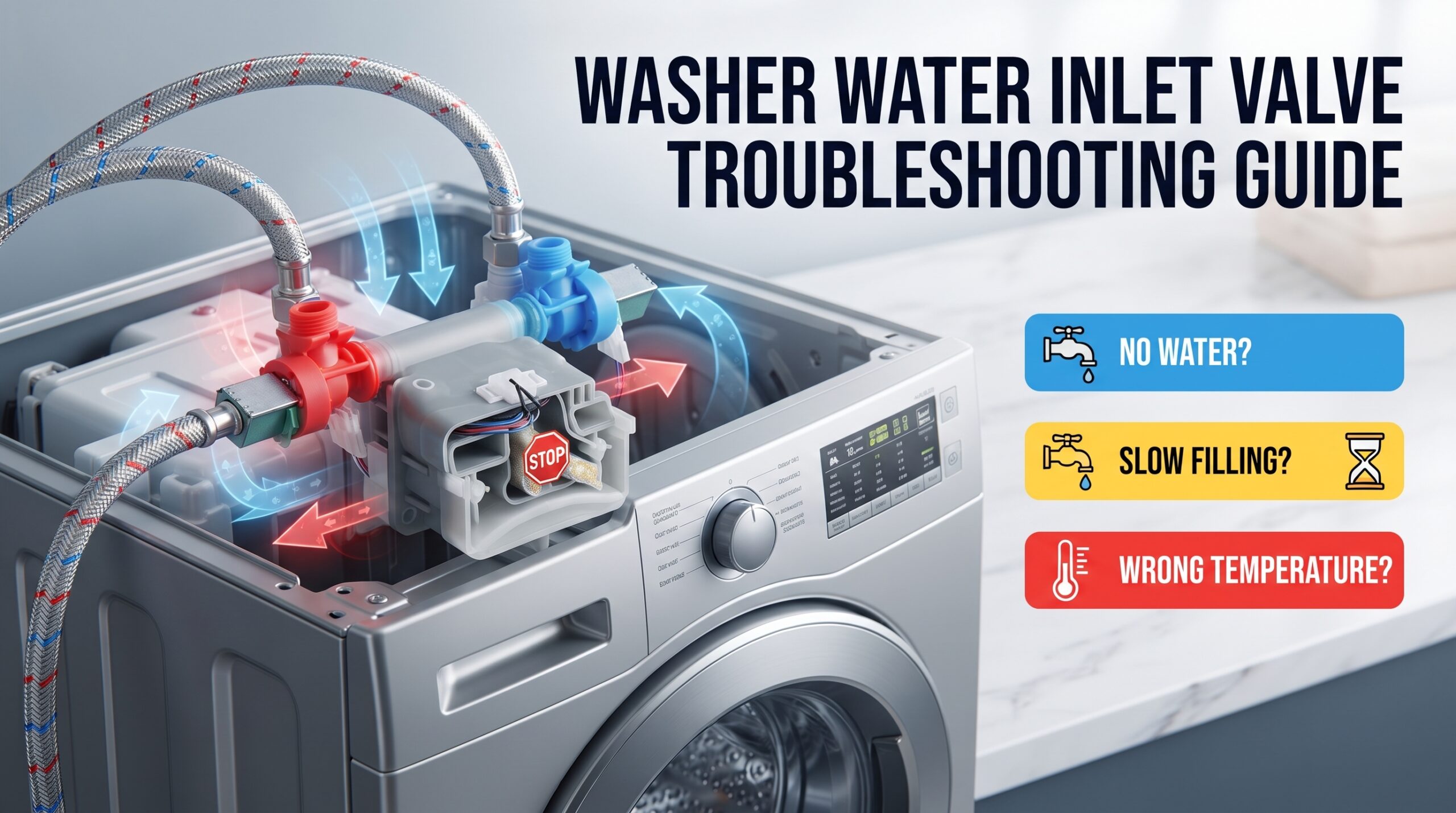
A washer water inlet valve controls the flow of hot and cold water into your washing machine. When the valve becomes clogged, restricted, electrically faulty, or mechanically stuck, the washer may not fill correctly.
Common symptoms include a washer that does not fill with water, fills slowly, uses the wrong water temperature, or continues filling when it should stop.
This washer water inlet valve troubleshooting guide explains the most common problems, possible causes, and basic checks you can perform before replacing the valve.
What Does a Washer Water Inlet Valve Do?
The water inlet valve is an electrically controlled component that opens when the washer needs water. It connects to the household water supply and directs water into the washer through the appropriate inlet.
Depending on the washer design, the valve may have separate hot and cold water connections and electrically operated solenoids.
When the control system sends power to the valve, the appropriate solenoid opens and allows water to enter the washer.
Common Washer Water Inlet Valve Problems
1. Washer Does Not Fill With Water
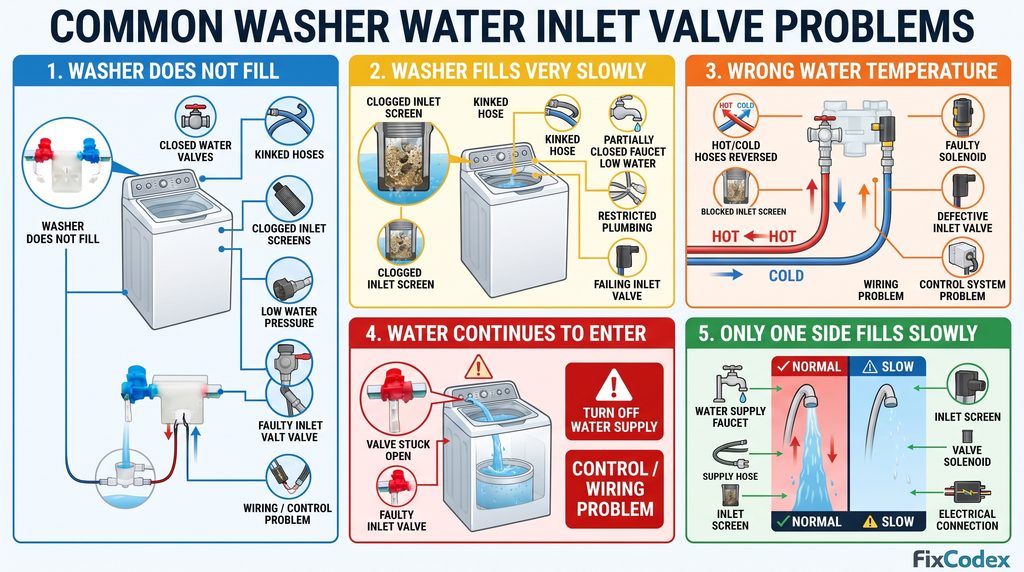
If the washer starts a cycle but no water enters the tub, several components could be responsible.
Possible causes include:
- Closed household water supply valves
- Kinked or blocked water hoses
- Clogged inlet screens
- Low household water pressure
- Faulty water inlet valve
- Electrical problem with the valve
- Faulty control or wiring
Check the water supply and hoses first. If the water supply is working correctly, the inlet valve may require further testing.
2. Washer Fills Very Slowly
A washer that takes unusually long to fill may have a restricted water supply.
Check for:
- Clogged valve inlet screens
- Kinked supply hoses
- Partially closed water faucets
- Low water pressure
- Restricted household plumbing
- A failing water inlet valve
Small screens inside the inlet valve can collect sediment and debris over time. A restricted screen can reduce water flow significantly.
3. Washer Fills With the Wrong Water Temperature
If the washer receives hot water when it should receive cold water, or vice versa, inspect the water connections and inlet valve.
Possible causes include:
- Hot and cold hoses connected incorrectly
- Blocked inlet screen
- Faulty solenoid
- Wiring problem
- Defective water inlet valve
- Control system problem
Before replacing a valve, verify that the hot and cold supply hoses are connected to the correct washer connections.
4. Water Continues to Enter the Washer
If water continues flowing into the washer even when the machine is not supposed to fill, turn off the household water supply immediately.
A water inlet valve that is mechanically stuck open can allow water to continue entering the washer.
Other possible causes should also be considered, so the valve and control system should be properly diagnosed before replacement.
5. Washer Fills Slowly on Only One Temperature Setting
If cold water works normally but hot water enters slowly, or the opposite occurs, the problem may be isolated to one side of the inlet valve.
Check:
- The corresponding water supply faucet
- The supply hose
- The inlet screen
- The valve solenoid
- Wiring and electrical connections
A restriction or failed solenoid can affect one water inlet while the other continues to operate normally.
How to Troubleshoot a Washer Water Inlet Valve
Step 1: Check the Water Supply
Make sure both household water supply valves are fully open.
Verify that your home has adequate water pressure and that there are no obvious plumbing problems.
Step 2: Inspect the Water Hoses
Check the hot and cold hoses for:
- Kinks
- Crushing
- Leaks
- Blockages
- Incorrect connections
A restricted hose can produce symptoms that look like a defective water inlet valve.
Step 3: Check the Inlet Screens
Disconnect the washer from power and shut off the water supply before inspecting the valve.
Look at the small filter screens where the water hoses connect to the inlet valve. Remove visible debris carefully without damaging the screens.
Step 4: Inspect the Electrical Connections
Look for loose, damaged, or corroded wiring around the water inlet valve.
Never work on electrical components while the washer is connected to power.
Step 5: Test the Water Inlet Valve
If you have the appropriate tools and experience, the valve solenoids can be tested according to the washer manufacturer’s service information.
Resistance readings should be compared with the specifications for the exact washer model.
A test result outside the manufacturer’s specification may indicate a defective solenoid.
Step 6: Check the Washer Control System
If the water supply, hoses, valve, and wiring appear normal, the problem may involve another component such as the control board, pressure-sensing system, or wiring harness.
Do not automatically replace the inlet valve simply because the washer is not filling.
When Should You Replace the Water Inlet Valve?
Consider replacing the water inlet valve when:
- The valve has a confirmed electrical failure
- A solenoid fails testing
- The valve is mechanically stuck
- The valve leaks internally
- The inlet screen or valve passage is severely restricted and cannot be restored
- The valve has visible physical damage
Always verify the replacement part against the complete washer model number, not just the brand name.
Finding the Correct Washer Water Inlet Valve
Washer water inlet valves are available in many different designs and part numbers.
For example, Whirlpool-family washers may use part numbers such as W11513255, W11038689, W10869800, and many others depending on the specific model.
Replacement and cross-reference numbers can also vary between applications.
Before ordering a replacement valve, compare:
- Original part number
- Complete washer model number
- Valve design and connections
- Electrical connector
- Hot/cold inlet configuration
- Manufacturer compatibility information
Do not assume that two valves are interchangeable simply because they look similar.
You Might Be Looking for These Parts:
- W11513255 Whirlpool Washer Water Inlet Valve
- W10869800 Whirlpool Washer Water Inlet Valve
- W11038689 Whirlpool Washer Water Inlet Valve
- W10701459 Whirlpool Washer Water Inlet Valve
- W11210463 Whirlpool Washer Water Inlet Valve
Looking for a replacement water inlet valve? Explore more Washer Water Inlet Valves to compare part numbers, compatible washer models, and replacement options before you buy.
Frequently Asked Questions
Can a clogged inlet valve cause a washer not to fill?
Yes. Debris can restrict the inlet screens or internal water passages and reduce or stop water flow.
How do I know if my washer water inlet valve is bad?
Symptoms can include no water entering the washer, slow filling, incorrect water temperature, or continuous water flow. However, these symptoms can have other causes, so proper diagnosis is recommended.
Can I clean a washer water inlet valve?
You can inspect and carefully clean accessible inlet screens if appropriate. If the internal valve or solenoid is defective, cleaning may not solve the problem and replacement may be necessary.
Why does my washer fill slowly?
Possible causes include low water pressure, kinked hoses, clogged inlet screens, restricted plumbing, or a failing water inlet valve.
Should I replace the inlet valve myself?
A water inlet valve replacement may be a manageable DIY repair for someone comfortable working on appliances. Always disconnect power and shut off the water supply before servicing the washer, and follow the manufacturer’s service instructions.
Explore Washer Water Inlet Valves
Need a replacement? Browse our collection of Washer Water Inlet Valves to compare part numbers, compatible washer models, and available replacement options.
Before purchasing, always verify the complete washer model number and part number to help ensure proper compatibility.
A washer that will not fill or fills slowly does not always have a defective water inlet valve. Start by checking the water supply, hoses, inlet screens, and electrical connections.
If testing confirms that the valve is defective, replacing it with the correct part can restore proper water flow and washer operation.
Always disconnect power and shut off the water supply before servicing your washing machine.
Looking for a washer control board? Explore our selection of washer control boards to find replacement options for different Whirlpool and Maytag washing machine models. Compare part numbers, compatibility, and available options before ordering. Always verify your complete washer model number and original part number to ensure the correct replacement.
Affiliate Disclosure: FixCodex may earn a commission if you purchase through our affiliate links, at no extra cost to you.